Founders · 9 min read
The State of Ownership: What I Took Home from ElevaTech Summit, London
On 6 August 2026 I spent a day at ElevaTech Summit in London. I went for the room as much as the programme. Five days later, one session is still shaping how I run my week, so I am writing it up properly before it fades.
The keynote was delivered by Ogochukwu Francis Osifo under the title "The State of Ownership". What follows is my reconstruction from the notes I took in the hall. Where I quote, I am quoting my notebook, not a transcript, so treat the wording as mine and the ideas as his. Where I have added my own view, I say so.

One sentence to hold onto
The talk opened with a definition that did more work than most hour-long sessions manage. Ownership is a responsibility: of the owner, to what is owned.
Read it twice. Most founders hear "ownership" and think of the cap table. He meant the opposite direction. Not what the company owes you. What you owe the company, the people in it, and the customer it exists for. Everything else in the session hung off that line.
He then broke ownership into three places it has to live. Beliefs. Actions and responses. Outcomes. I will take them in that order, because he did, and because the order matters. You cannot own an outcome you did not act on, and you cannot act well on a belief you never examined.
Owned beliefs
The first question he put to the room was simple and uncomfortable. What do you believe, and what shaped the belief you carry?
Then a second question that sounded like a trick and was not. What is a startup?
Most people in the room had a borrowed answer. A company that grows fast. A company with venture funding. A company that is not yet profitable. His point was that if you cannot define the thing you are building in your own words, you are running on someone else's belief, and someone else's belief will not hold you up at 2am when the runway is short.
Three things he said under this heading that I wrote down in full:
Intentionality. Answer the why yourself. Not the investor's why, not the accelerator's why. If your reason for building this is a reason you absorbed rather than chose, the first hard quarter will expose it.
Hire professionals, not interns. This one divided the room. His argument was that a startup is not a training scheme. Professionals cost more, and you build and grow faster with them, and the quality of the people in the business is the business. My own experience agrees. The years I spent trying to save money with junior hires cost more in rework and in my own time than a senior hire would have. I would add one qualifier he did not: hire interns when you have a professional for them to learn from, never instead of one.
As a founder, what culture are you trying to create? Not what culture you hope will emerge. What you are trying to create, on purpose, from the first hire. Culture is a belief made visible, and if you have not decided what you believe, your early team will decide for you.
He closed the section with a line about networks that I have thought about every day since. In your network, who would recommend you for your role? If you cannot count the people who would, you are not visible yet. I run a visibility practice for a living and still had to sit with that one.
Owned actions and responses
The second place ownership lives is in what you do, and in how you respond when what you did does not work.
His rule for decisions was short. There is no time to overthink. Be flexible, and decide on the information available at the time. The ownership part is not in getting it right. It is in accepting that the decision was yours, made with what you had, and that revisiting it with information you did not have then is not analysis, it is self-punishment.
Then he turned to a habit I see constantly in founders and have been guilty of myself. Operating on activities rather than outcomes. The calendar is full, the Slack is busy, the deck is on version fourteen, and the number that matters has not moved. Activities feel like ownership because they are tiring. They are not. Ownership is picking the outcome, naming it, and being measured against it.
Which led to the sharpest line of the morning. Take ownership as if you will be responsible for the outcome, whether or not you were directly involved. A founder who says "that was the marketing team" or "that was the agency" has not delegated. They have abdicated. The work can be someone else's. The result cannot.
He also had a warning about narrative that I want to repeat carefully, because it is easy to hear it wrongly. Be careful of storytelling. He was not against telling the company's story. He was against believing it. Founders spend so much time constructing the narrative for investors and press that they start making decisions to protect the story rather than the business. Own the decision. Own the mistake. Tell the story afterwards, and tell it honestly.
Owned outcomes
The third section was about luck, and about money, and about the strange relationship between the two.
People create their luck. It did not just happen. He put it as a question rather than a slogan: how are you creating the ripple effects that bring you opportunities? The founders who seem lucky are the ones who were in the room, had shipped the thing, had sent the email, had written the post, months before the opportunity existed. Luck is the visible end of a long chain of small, unglamorous acts of showing up.
Trust is the currency. Not reach, not funding, not followers. In a market where everyone can generate a pitch deck in an afternoon, the thing that cannot be generated is a track record of doing what you said you would.
On raising money, he asked the room to ask why again. Why are you raising? Not "because it is the next step". The customer does not care about your round. The customer has a problem and you have a solution, and that is the whole of what they care about. If the raise does not make the solution better or reach more people with the problem, you are raising for the story, which is the thing he had just warned about.
Two practical notes on money that I underlined. Ask people about their problem, not about your product. And know how to ask for money: price to the value you offer, not to the hours it took or to what the competitor charges. I have made that second point to clients for years in the context of consulting fees. Hearing it applied to a startup's pricing was a useful reminder that it is the same discipline.
The three questions he left us with
He ended with three questions. I have them on a card by my desk now.
- What beliefs are you outsourcing?
- What actions are you avoiding?
- What outcomes are you blaming on luck?
And one instruction. Own your beliefs, your actions, and what comes next.
I have answered those three questions for SEOGidi since, and for SERPGidi, which launches early next year. The answers were less comfortable than I expected. The belief I was outsourcing was about pace: I had absorbed an idea of how fast a startup should move that came from people with ten times my funding. The action I was avoiding was asking for money at the price the work deserved. The outcome I had filed under luck was a client I lost, which on inspection was not bad luck but a conversation I had not had early enough.
From the panel: visibility and the shortlist
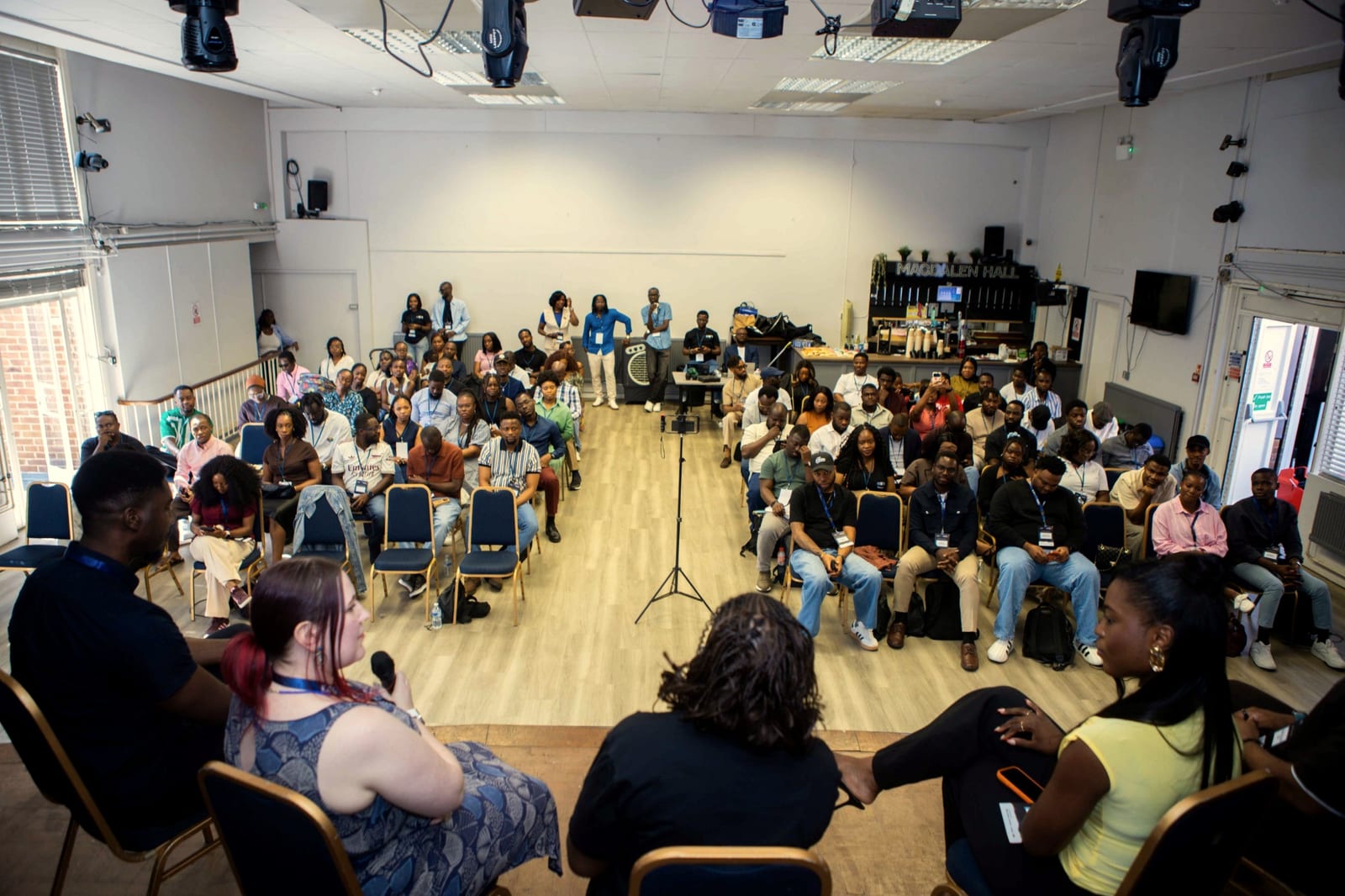
The afternoon panel covered a lot of ground. Two threads are worth keeping.
The first was about networks, and it corrected something I think most people get wrong. Network with people at your level, not only with the people above you. The people above you are busy and will mostly forget you. The people beside you are building at the same time, will hire you, refer you, partner with you, and in five years will be the people above. Stay relevant to them. The simplest way to do that is to share your work where they can see it, and to share it before it is finished. You do not need to be an expert to be worth following. Sharing the struggle and the learning is often more useful to your peers than sharing the result, and it is certainly more believable.
Visibility, one panellist said, is constantly pushing your work to the people who need to see it. Making yourself fresh in people's minds. That is not a one-off launch post. It is a habit, and the founders who have it are not the loudest ones. They are the ones you can describe in a sentence because they have said the same sentence, in different ways, for two years.
The second thread was a small, practical idea for anyone hiring, and it stuck with me because it is cheap. When you open a role, add a short set of custom questions to the application that let the person qualify themselves. Not "describe your experience". Questions that invite something they have done elsewhere that is not on the CV but is relevant to this job. The founder who suggested it said it had changed who got shortlisted, because the people who could answer were often not the people with the tidiest CVs. Having hired for SEO roles where the best candidate had never had "SEO" in a job title, I believe it.
Building with AI: five lines before you prompt
The last session I stayed for was on building with AI, and it offered a framework so plain that I almost did not write it down. I am glad I did, because I have used it every working day since.
Before you ask a model to do anything, answer five things in writing:
- Problem. What are you actually trying to solve? One sentence.
- Context. What does the model need to know about the situation that it cannot infer?
- Data. What are you giving it to work from, and what is missing?
- Rules. What must it do, and what must it never do?
- Output. What does done look like, in what form, for whom?
Most bad AI output I see in marketing teams fails at line one. The person did not know what problem they were solving, so the model solved a different one, fluently. The framework is not about prompting. It is the same discipline as the keynote, applied to a tool: decide what you want before you act, and own the result.
What I am doing differently
Three changes, since the summit.
I now write the outcome at the top of every client engagement and every internal project, in one line, before any activity is planned. If I cannot write it, we are not ready to start.
I price to value and I say the number without apologising for it. The first time I did this after the summit, the client said yes without negotiating, and I realised how much money my discomfort had been costing me.
And I publish more of the unfinished work. This journal is part of that. The article you are reading is a set of notes from a conference, written up a few days late. Two years ago I would have decided it was not polished enough to post. The panel was right. It is the sharing that makes you visible, not the polish.
If you were in the hall and remember any of this differently, write to me. I would rather correct the record than keep a tidy version of it.